Source vegan organic fat burner gummies for weight loss, digestion, and energy
Find 30 listings of vegan organic fat burner gummies designed for weight loss, digestion support, and energy boosting. Compare specifications, certifications, and pricing from verified manufacturers offering OEM services and custom packaging options.
Key considerations
Products List

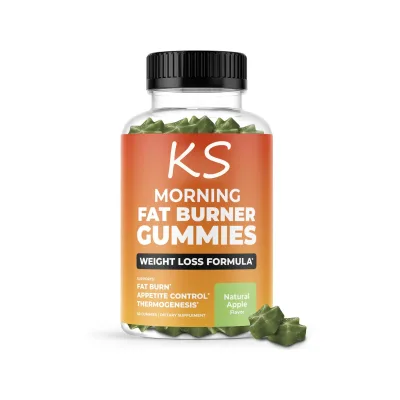
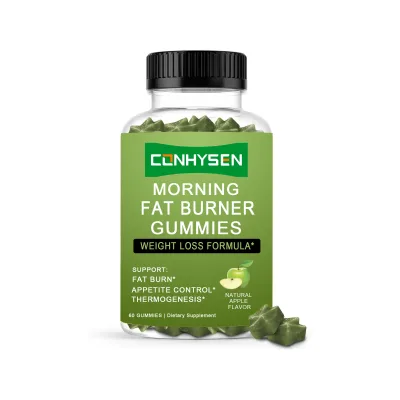

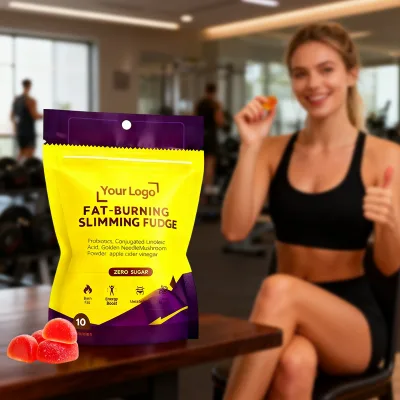

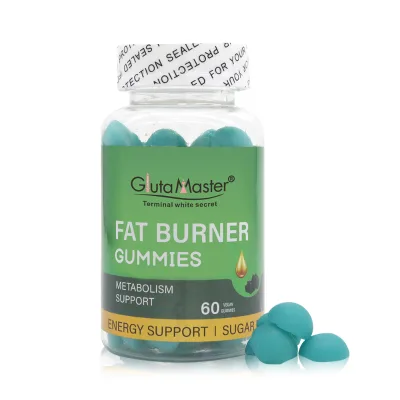



Comprehensive Sourcing Guide
Strategic Sourcing Guide for Vegan Organic Fat Burner Gummies
Understanding Product Specifications and Formulation Variability
When sourcing vegan organic fat burner gummies, buyers must first navigate a complex landscape of formulation definitions and physical specifications. The core keyword implies a product that is both plant-based and derived from organic sources, yet the market data reveals significant variation in how these attributes are applied. In the current supply environment, specific product listings identify "Apple Cider Vinegar" and "Organic Beet Root" as active ingredients, while other variants rely on a blend of "Green Tea, Garcinia, Raspberry Ketone, Green Coffee Bean, and Caffeine." This divergence necessitates that procurement teams clearly define whether the requirement is for a single-ingredient focus or a multi-component metabolic support formula.
The dosage form is consistently identified as "Gummies" or "Gummy Candy," which offers distinct advantages in consumer compliance compared to traditional capsules. However, the physical specifications vary widely. One observed model number, KS-FBG224, is associated with a "5 in 1 Full Ranges Of Fat Burning Set," while another, KS-WLG008, is categorized under "Dietary Fiber." The single package size for certain configurations is recorded as 20x20x10 cm, with individual gummy weights ranging between 2.5g and 3g per piece. Buyers must verify the "Single volume" and "Single gross weight" for each specific SKU, as some data points list these as 0 cm³ or 0.0 kg, which likely indicates missing data in the source listing rather than a physical reality. Accurate specification mapping is critical for logistics planning, as the "Selling Units" may be listed as single items, while the actual MOQ (Minimum Order Quantity) can range from as low as 3 pieces to as high as 100,000 pieces depending on the supplier's capacity.
Compliance Framework and Certification Verification
In the dietary supplement sector, particularly for products targeting weight loss and metabolism, certification is not merely a marketing asset but a fundamental requirement for market entry and liability protection. The supply data indicates that manufacturers in the region often hold a portfolio of certifications including GMP (Good Manufacturing Practice), MSDS (Material Safety Data Sheet), CE, ISO, and HACCP (Hazard Analysis and Critical Control Points). Another set of data points lists GMP, HACCP, QS, and ISO, suggesting that while GMP and ISO are prevalent, other certifications like QS or CE may vary by specific factory or product line.
Buyers must treat these certifications as observations of specific listings rather than universal guarantees for all products in the category. The "Health Food Grade" classification is explicitly mentioned for certain items, which is a crucial indicator of the intended regulatory tier. However, the presence of a certificate on a product page does not automatically validate the specific batch being ordered. Procurement professionals should verify that the GMP and ISO certifications are current and applicable to the specific facility where the gummies are produced. Furthermore, the "MSDS" requirement is vital for shipping compliance, especially when the product contains volatile organic compounds or specific herbal extracts. The "QS" certification, often relevant in specific regional markets, should be cross-referenced with the destination country's import regulations.
Cost Drivers and Pricing Structure Analysis
The pricing structure for vegan organic fat burner gummies is influenced by several dynamic factors, including ingredient sourcing, formulation complexity, and order volume. The observed listed price range in the market data spans from $0.02 to $6.00 USD. This wide variance suggests that the lower end of the spectrum likely represents bulk raw material costs or extremely high-volume wholesale pricing, while the upper end may reflect finished goods with premium packaging, specific organic certifications, or lower MOQs.
The "MOQ" is a primary cost driver, with observed ranges extending from 3 pieces to 100,000 pieces. Suppliers offering an MOQ of 10 pieces or even 3 pieces typically command a higher unit price due to the operational overhead of handling small batches. Conversely, orders approaching the 100,000-unit threshold are likely to benefit from economies of scale. The "Lead time" for production is another variable cost factor, with observed ranges of 2 to 15 days. Shorter lead times may incur expedited manufacturing fees, while longer lead times allow for more efficient production scheduling but delay time-to-market. Additionally, the "Service" options, such as OEM (Original Equipment Manufacturer), ODM (Original Design Manufacturer), and OBM (Original Brand Manufacturer), add layers of cost. Customization of logos, packaging, and specific ingredient ratios will inevitably increase the final unit cost compared to standard stock products.
Typical Applications and Target Audience Segmentation
The functional positioning of these gummies is heavily oriented toward metabolic support and weight management. The observed product benefits explicitly include "digestive health support," "gut health support," and "metabolism management." Specific effectiveness claims in the data point to "Providing Energy," "Promote Digestion," "Weight loss and detoxification," and "MAXIMUM STRENGTH BURNS TUMMY FAT." The "Function" is further detailed as burning belly fat, boosting metabolism, supporting fitness, and boosting energy. These attributes align with the growing consumer demand for convenient, non-pill formats that support active lifestyles.
The "Applicable People" are broadly defined as Men, Women, Adults, and in some cases, Middle-Aged and Elderly people. However, strict contraindications are noted. The data explicitly states that the product is "Not Applicable" to "Pregnant Women" and "Newborns." This exclusion is critical for liability management and consumer safety. The "Flavor" profiles, such as "60 Pcs Flat Tummy Gummies," suggest a focus on palatability to ensure consistent daily consumption. The "Type" of product is sometimes described as a "Cream Oil Capsules Tea Gummy Set," indicating that some suppliers may offer bundled solutions or multi-modal approaches to fat burning, combining gummies with other delivery methods. Buyers should ensure that the marketing claims align with the regulatory environment of their target market, as terms like "detoxification" and "maximum strength" can be subject to strict advertising regulations in various jurisdictions.
Supplier Evaluation and Manufacturing Capabilities
Evaluating a supplier for vegan organic fat burner gummies requires a deep dive into their manufacturing capabilities and service flexibility. The "Place of Origin" for the observed products is consistently "Guangdong, China," a major hub for dietary supplement manufacturing. Buyers should verify the specific factory location within this region, as Guangdong contains a mix of large-scale industrial facilities and smaller boutique manufacturers. The "Service" capabilities are extensive, with many suppliers offering "OEM ODM Private Label Service," allowing for custom logos, packaging, and formulation adjustments.
The "Sample" availability is a key indicator of supplier reliability. The data confirms that samples are acceptable, which is a standard practice for verifying product quality before committing to large orders. However, the "Lead time for" samples versus bulk production should be clarified, as sample turnaround can differ significantly from the 2-15 day bulk lead time. The "Payment" terms observed include PayPal, Western Union, TT (Telegraphic Transfer), and Trade Assurance. Trade Assurance is particularly valuable as it offers a layer of financial protection for the buyer. When evaluating suppliers, buyers should request documentation of their "Grade" (e.g., Health Food Grade) and verify the "Shelf-Life" claims, which range from 18 months to 36 months in the data. A discrepancy between the claimed shelf life and the actual storage conditions required (e.g., "Dry place" vs. "Store Cool Dry Place") can impact product stability and shelf life.
Quality Control Protocols and Long-Term Procurement Strategy
Establishing a robust quality control (QC) protocol is essential for maintaining the integrity of vegan organic fat burner gummies. The "Storage Method" is a critical parameter, with instructions ranging from "Dry place" to "Store Cool Dry Place." Failure to adhere to these storage conditions can degrade the active ingredients, such as Green Tea extract or Raspberry Ketone, rendering the product ineffective. The "Shelf-Life" of 18 to 36 months indicates a relatively stable product, but this is contingent on proper handling throughout the supply chain.
For long-term procurement, buyers should prioritize suppliers who demonstrate transparency in their "Main Ingredient" sourcing. The distinction between "Herbal" and "Vegan" is important; while the data lists "Main Ingredient: Herbal,Vegan," buyers must confirm that the gelatin or pectin used in the gummy base is indeed plant-derived to meet strict vegan standards. The "Specification" of "2.5-3g*60 gummies/bottle or custom" suggests that standard bottle counts are common, but customization is a viable option. To mitigate risks, buyers should implement a phased ordering strategy, starting with sample verification, moving to a small trial batch, and then scaling to full production volumes. Regular third-party testing for heavy metals, microbial contamination, and active ingredient potency should be mandated, even if the supplier provides internal test results. The "Certificate" list (GMP, HACCP, QS, ISO) should be reviewed annually to ensure continued compliance. By focusing on these technical and operational details, buyers can secure a reliable supply chain for high-quality vegan organic fat burner gummies that meet both regulatory standards and consumer expectations.
FAQs
What certifications do these gummies typically hold?
Products typically hold GMP, ISO, HACCP, and MSDS certifications. Some listings also include CE or QS certificates depending on the specific factory and product line, ensuring compliance with safety and manufacturing standards.
Which ingredients are commonly used in these formulas?
Common active ingredients include Apple Cider Vinegar, Organic Beet Root, Green Tea, Garcinia, and Raspberry Ketone. Formulations vary between single-ingredient focuses and multi-component blends designed for metabolism support and energy boosting.
How long is the shelf life of these gummies?
Shelf life ranges from 18 to 36 months depending on the specific product model. Storage requires a cool, dry place to maintain stability, as improper conditions can degrade active herbal extracts like Green Tea or Caffeine.
Can buyers request custom packaging and private labels?
Yes, suppliers offer OEM, ODM, and private label services for logos and packaging. Customization options allow for specific ingredient ratios and bottle specifications, though this may affect the final unit cost and minimum order requirements.
What is the minimum order quantity for these products?
Minimum order quantities vary widely from 3 pieces to 100,000 pieces based on supplier capacity. Lower MOQs often command higher unit prices due to operational overhead, while bulk orders benefit from economies of scale.
Where are these gummies typically manufactured?
Products are consistently sourced from Guangdong, China, a major hub for dietary supplement manufacturing. Buyers should verify specific factory locations within this region to ensure quality control and logistical efficiency for their orders.
Who is the target audience for these fat burner gummies?
These gummies are suitable for men, women, adults, and middle-aged or elderly people. They are explicitly not applicable to pregnant women and newborns, requiring strict adherence to safety contraindications during marketing and distribution.